
Disclosure: This post may contain affiliate links, meaning I get a commission if you decide to make a purchase through my links, at no extra cost for you!
Glacier National Park is one of the most spectacular places in the United States — and honestly, in the world.
Dramatic mountain peaks, turquoise lakes, ancient glaciers, and some of the best hiking on the continent. It truly is breathtaking.
But Glacier can also catch you off guard if you don’t know what to expect. The weather is unpredictable, some of the most iconic roads are only open for a few months of the year, and the park is wilder and more remote than many visitors anticipate.
These tips will help you make the most of your visit — whatever time of year you go.
Here are my essential travel tips for visiting Glacier National Park!
1. Choose the Right Time to Visit
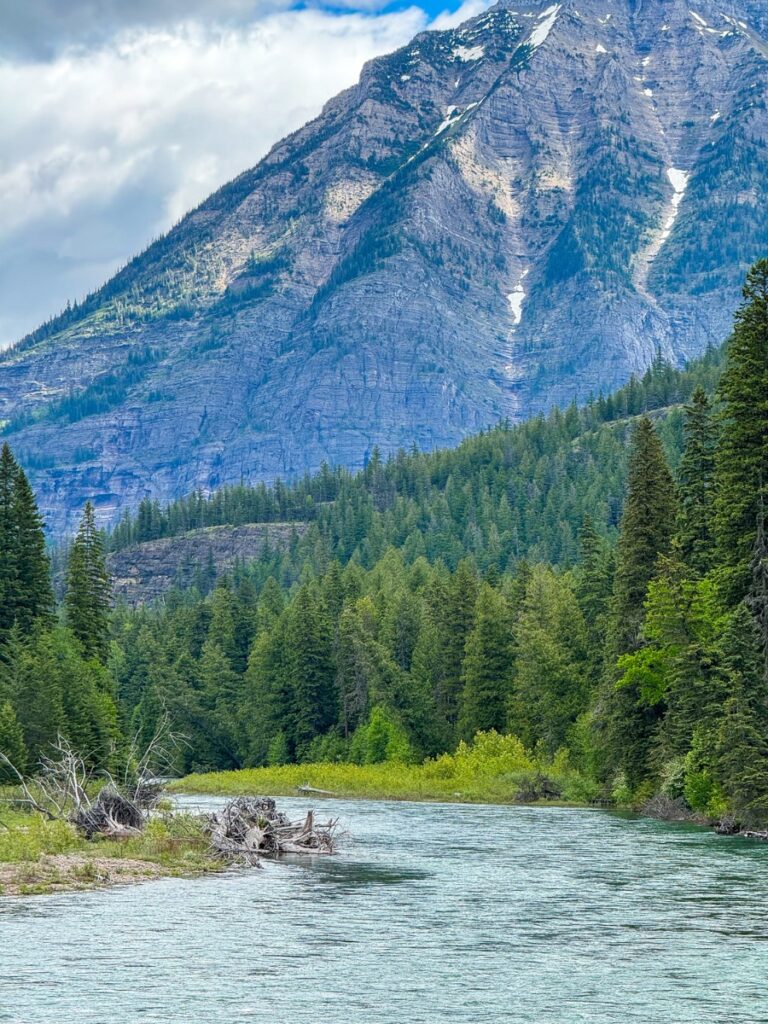
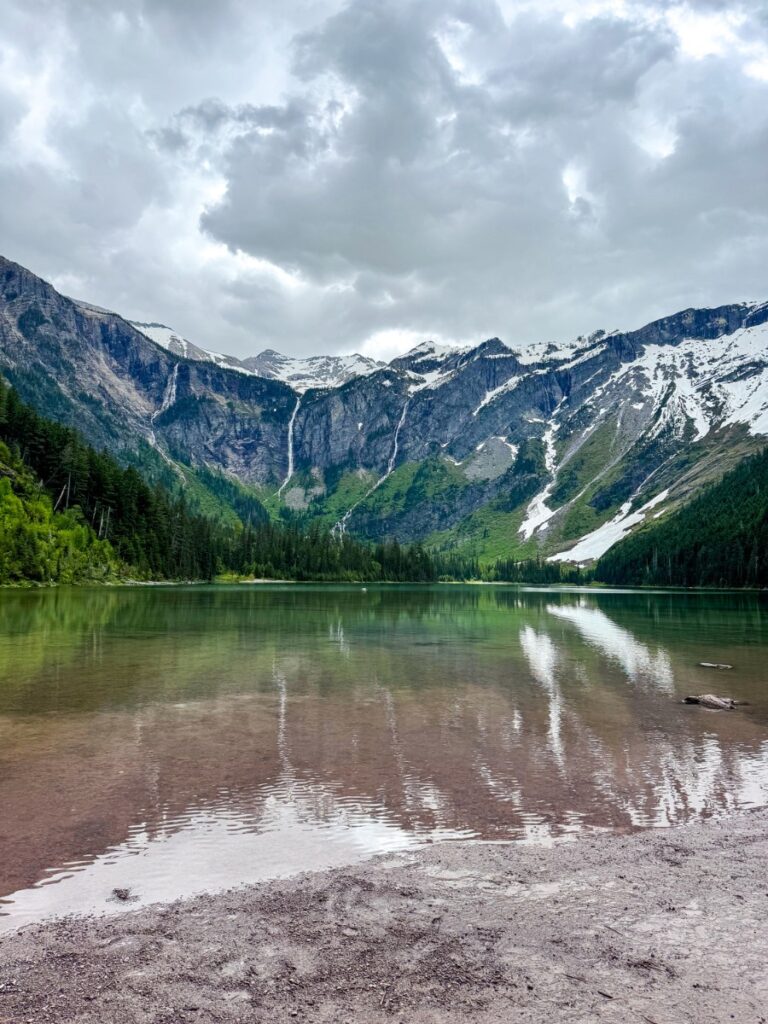
There is no single “best” time to visit Glacier — it genuinely depends on what you’re looking for. But the different seasons are quite different from each other, so it’s worth understanding what each one offers before you book.
Spring (up to April – May): Most of the roads and trails in the park are still closed. Snow covers the high country, many roads are inaccessible, and Going-to-the-Sun Road is firmly shut. Not the time to come if you want to see the park in full.
End of May – June: Things start to open up, and the lower sections of the park are accessible and beautiful. Going-to-the-Sun Road, however, is often still closed — at least the alpine section up to Logan Pass. The lower parts are open, and some of the best hikes (like Avalanche Lake) are accessible. Expect some unpredictable weather.
July and August: The weather is glorious and the park is at its most open. But it is also at its most crowded. Parking fills up early, accommodation is expensive and books up fast, and popular trails can feel busy. If you’re coming in peak season, plan and book well in advance.
September and October: This is genuinely a wonderful time to visit. The summer crowds have gone, Going-to-the-Sun Road is still open (the snow hasn’t returned yet), and the landscape is stunning in autumn colours. Accommodation becomes more available and more affordable. Worth serious consideration.
Winter: Most roads in the park are closed, and the experience is very different — more of a backcountry, snowshoeing kind of visit. Beautiful in its own way, but not what most visitors are looking for.
The bottom line: there’s no objectively wrong time to visit Glacier. It just depends on your priorities.
2. Visit One of the Visitor Centers — and Talk to the Rangers
This is one of my favourite tips for any national park, and it’s especially true in Glacier.
All of the visitor centers in the park are excellent. They have informative exhibitions about the geology, wildlife, and history of the park, and they’re a great place to orient yourself when you arrive.
But the real reason to go is the park rangers.
The rangers at Glacier know the park like the back of their hand — and they are genuinely brilliant to talk to.
Tell them how many days you have, what kind of things you like, what the weather looks like that day — and they will give you a recommendation tailored exactly to you. It’s like having a personal guide, completely for free.
3. Join a Free Park Ranger Activity
While you’re at the visitor center, pick up the free daily park newspaper.
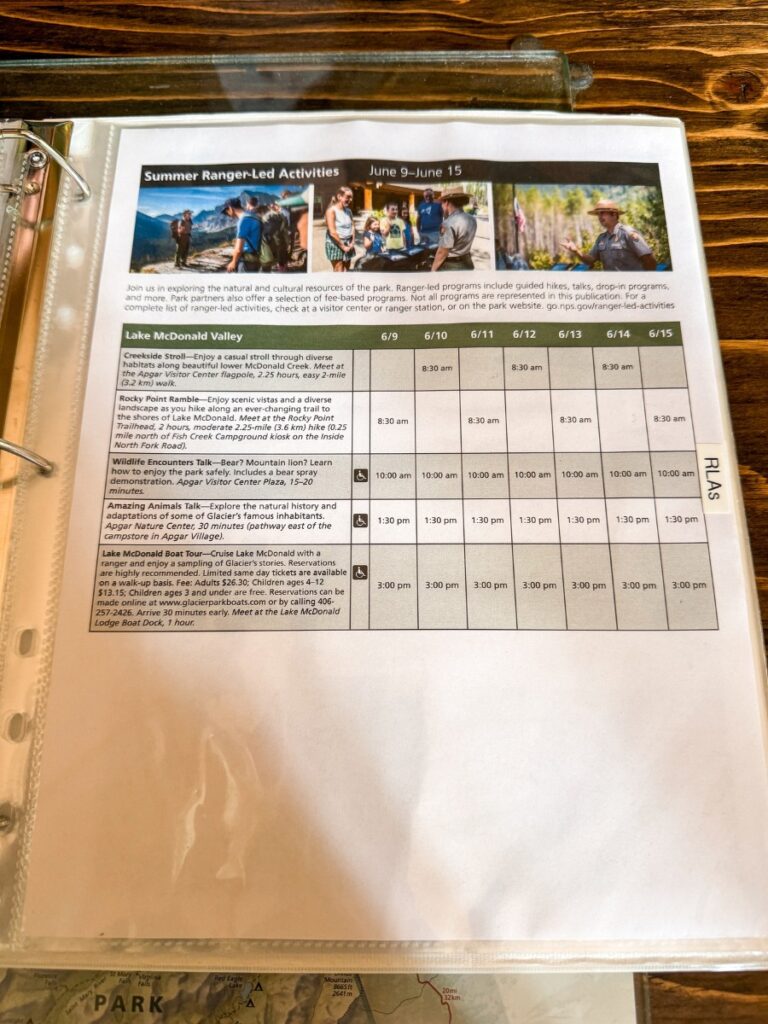
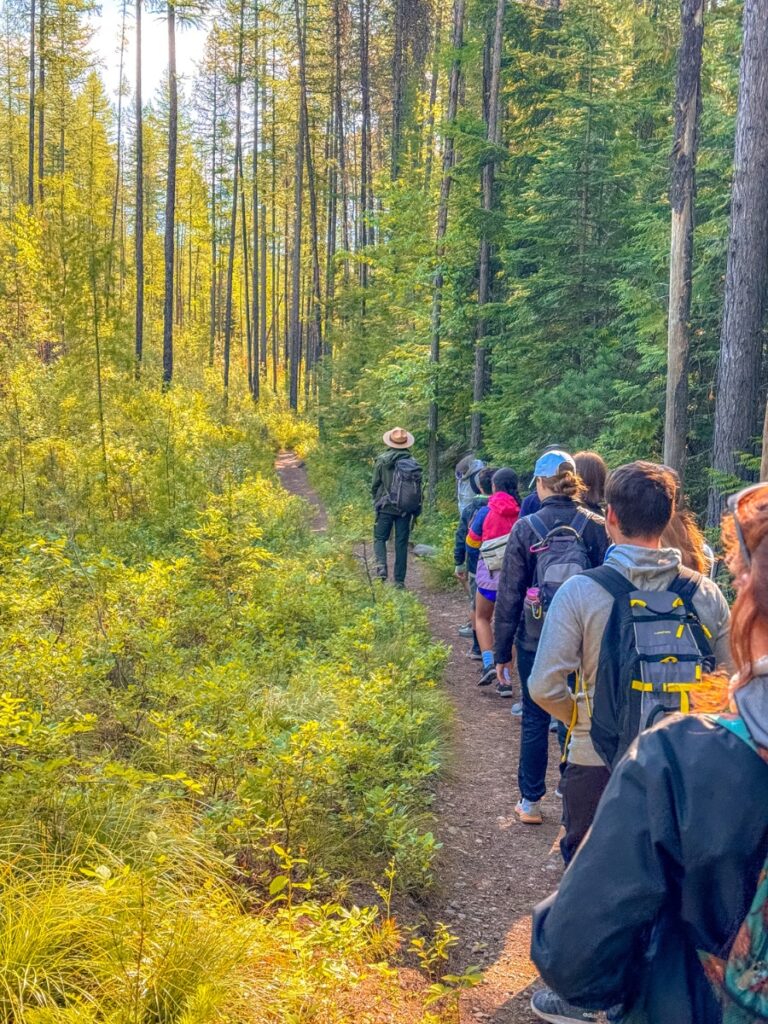
It lists all the ranger-led activities happening that day — guided walks, nature talks, wildlife presentations, and various workshops throughout the park. The vast majority of them are completely free to join, and they are genuinely wonderful.
It’s a really cool experience to get around with a park ranger and listen to what they have to say.
You learn so much more than you would on your own, and you get to ask questions as you go (I may have quizzed them about how to become a park ranger a few times haha)
The one exception is the boat tour on Lake McDonald — you do pay for that, but only because you’re paying for the boat itself. The ranger who accompanies the tour comes at no extra cost, and the combination of the lake scenery and the ranger commentary makes it well worth it.
4. Check Road Closures Before You Go
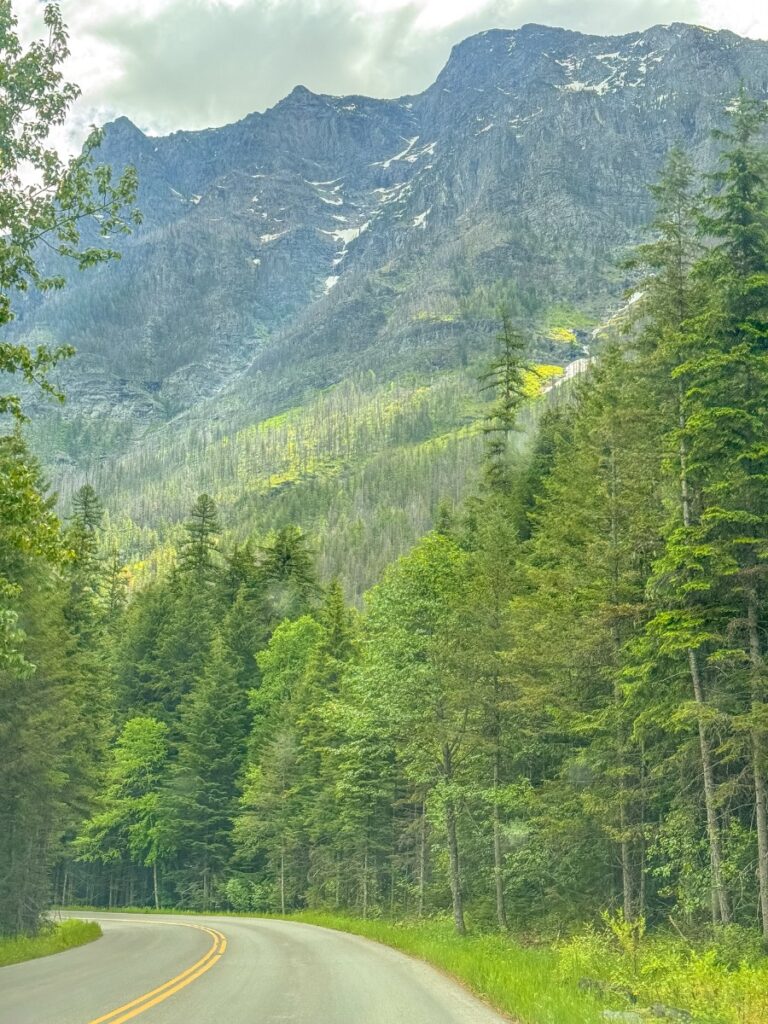
The Going-to-the-Sun Road is the most iconic drive in Glacier and the one that most people come to see; however, it is not always open.
The alpine section of the road, which crosses the Continental Divide and takes you up to Logan Pass, is typically closed from around November through to late June or July.
The exact opening date varies every year depending on the snowpack and how quickly the park crews can clear the road.
Before your trip, and again each morning before you head out, check the NPS Glacier website for the latest road conditions. Don’t assume the road is open — always check.
The lower sections of Going-to-the-Sun Road are open for a much longer season and are well worth visiting even when Logan Pass is inaccessible.
5. Be Aware of the 3-Hour Parking Limit at Logan Pass

If you’re visiting when Going-to-the-Sun Road is fully open, there’s something important to know about Logan Pass.
Parking at Logan Pass is time-limited to 3 hours. The car park fills up quickly on busy days, and you can’t simply leave your car there for the whole day.
One excellent alternative is the Logan Pass Shuttle, which runs from several boarding locations on both sides of the park and drops you at Logan Pass in the morning. In 2026, tickets cost $1 per person and must be booked in advance through Recreation.gov — they are not available to buy in person at the park.
6. Book Accommodation in Advance

Glacier is one of the most popular national parks in the country, and accommodation goes fast — sometimes months in advance.
If you want to stay inside the park, you’ll need to book early. The lodges and campgrounds within Glacier are in high demand, particularly in July and August. Campgrounds especially need to be reserved well ahead of time.
Outside the park, you’ll find cheaper accommodation which can be a great option as long as you don’t mind driving back and forth.
7. Pack for Four Seasons in One Day
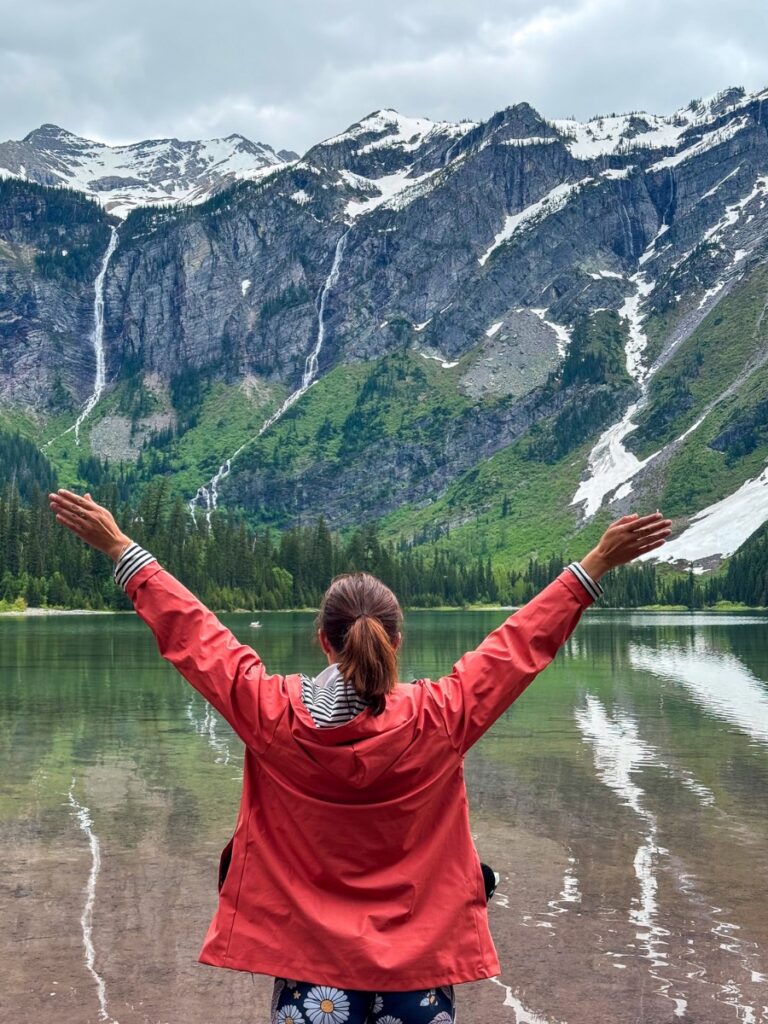

Glacier’s weather is famously unpredictable, and you will almost certainly experience more than one version of it on any given day.
A warm, sunny morning can turn into a cool, breezy afternoon. Conditions at altitude are always cooler than in the valley, sometimes significantly so. Storms can roll in quickly, especially later in the afternoon.
You’ll want a warm base layer, a rain jacket, a windbreaker, and light layers you can add or remove as the temperature shifts. Bring all of it — you will use all of it.
8. Be Careful with the Weather When You’re Hiking
This is especially important if you’re heading on longer trails.
Afternoon thunderstorms are not uncommon in summer in the Rockies, and at altitude they can be sudden and severe.
Always check the weather forecast before you go hiking. Start hikes early so you’re back before any potential afternoon storms develop. And if the skies start looking threatening while you’re out, trust your instincts and head down.
9. Bring the Right Gear: Hiking Shoes, Sunscreen, and Bug Spray

Three things that are absolutely non-negotiable for a Glacier visit:
Hiking shoes: Proper waterproof hiking shoes or trail boots. In early season, trails can be muddy and wet from snowmelt. Higher-elevation trails may have snow. Sneakers won’t cut it, and blisters on day one will ruin the rest of your trip.
Sunscreen: Glacier sits at altitude, and UV exposure up here is stronger than you’d expect — even on overcast days. You’ll be spending long hours outside so it’s better to apply sunscreen to protect your skin.
Bug spray: Summer in particular is prime mosquito season in Glacier, especially around the lakes and in the forests early and late in the day. Pack a good bug spray and keep it accessible in your daypack.
10. Carry Bear Spray — and Know How to Use It
Listen, I know this one divides people but I personally think it’s better to be safe than sorry so I would recommend getting bear spray from one of the outfitters.
Make sure you’re carrying it on your belt — somewhere you can reach it in seconds. Not in your bag, zipped away.
When you buy your bear spray, ask the store to show you how to use it. This is important — it’s no good having it if you can’t deploy it quickly and correctly in a stressful situation.
11. Bring a Refillable Water Bottle
Hydration matters more than you think in the mountains.
Carry a large refillable water bottle and drink consistently throughout the day. You can refill it at visitor centers throughout the park.
I would also recommend getting a bottle of Gatorade as the electrolytes really help.
I was struggling with awful altitude headaches in Glacier and Yellowstone and bought Gatorade after a park ranger recommended it and it made a huge difference.
12. Keep a Distance from All Wildlife
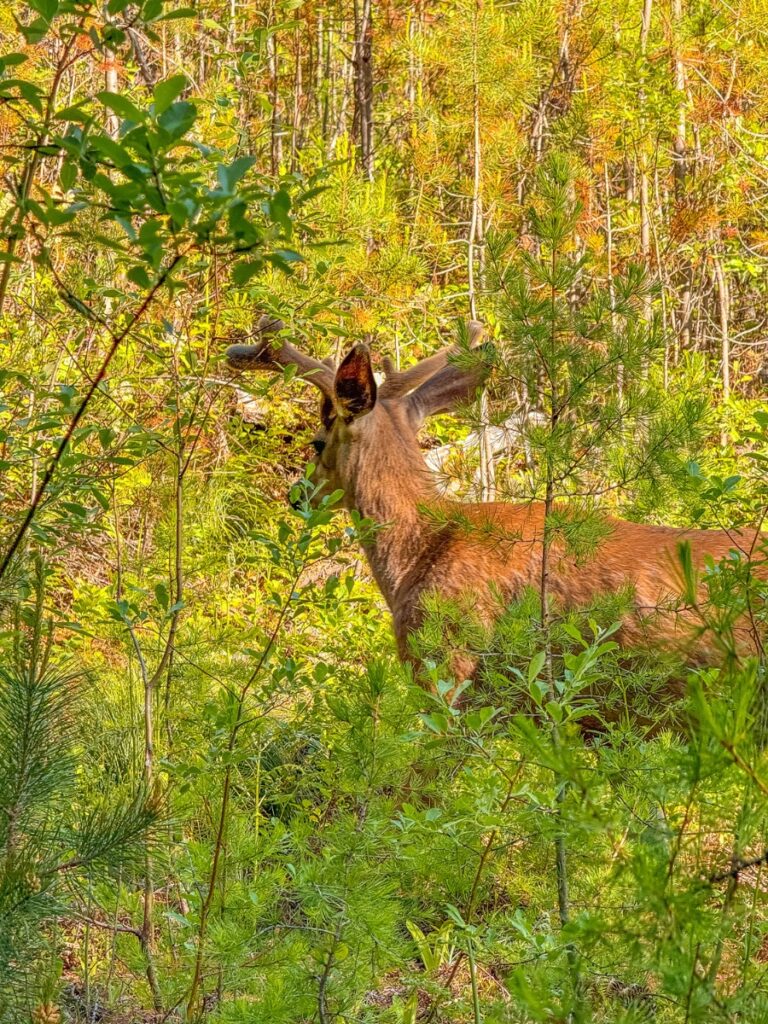
Glacier is genuinely wild, and the wildlife here is exactly that — wild.
The official guidance is to stay at least 100 yards from bears and at least 25 yards from all other wildlife.
While you probably won’t see as many animals as you would in Yellowstone, it’s still very important to stay away.
This is for their safety as much as for yours.
13. Start Early
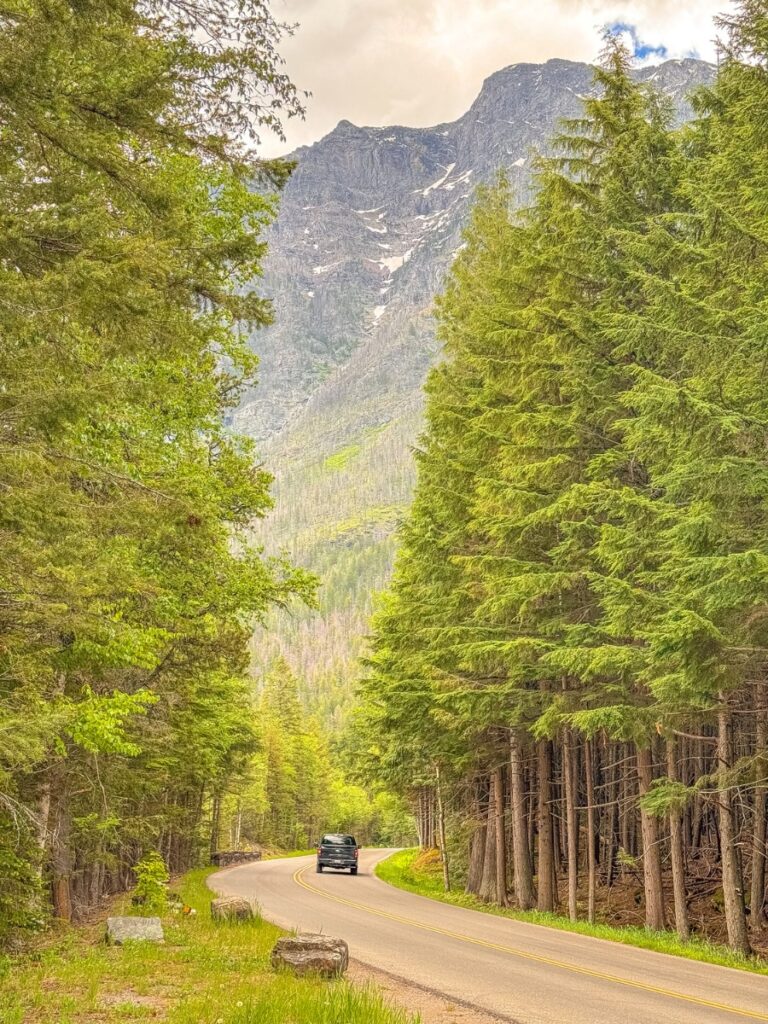
I know it’s a holiday and you want to sleep in. But getting up early in Glacier is one of the best decisions you can make.
The early morning light in the mountains is extraordinary. Popular trailheads that are packed by 11am are quiet and peaceful at 8am. Also, wildlife is most active at dawn.
And in peak season, parking at key spots fills up early. If you’re planning to visit Logan Pass or a popular trailhead, an early start can be the difference between getting a space and driving around for an hour.
You don’t need to do it every day. But make at least one or two mornings early ones — you will not regret it.
14. Pack Food and Keep It in Your Car
Food options inside Glacier are limited, and what’s there tends to be more expensive than outside the park.
Pack a picnic lunch and snacks for the day. It’s cheaper, it’s more flexible, and it means you can eat at a beautiful viewpoint rather than driving back out for a meal.
One important rule: always store your food in your car, not in your backpack or at the trailhead. Glacier has a significant bear population, and food left out — or carried on the trail — can attract wildlife. When you park at a trailhead, make sure everything edible is in the car with the windows closed. And never leave food unattended at a picnic spot.
I hope these tips help you have the most extraordinary trip to Glacier National Park.
It really is one of the most beautiful places on earth — and a little preparation goes a very long way toward making the experience everything it should be.
You May Also Be Interested in:
